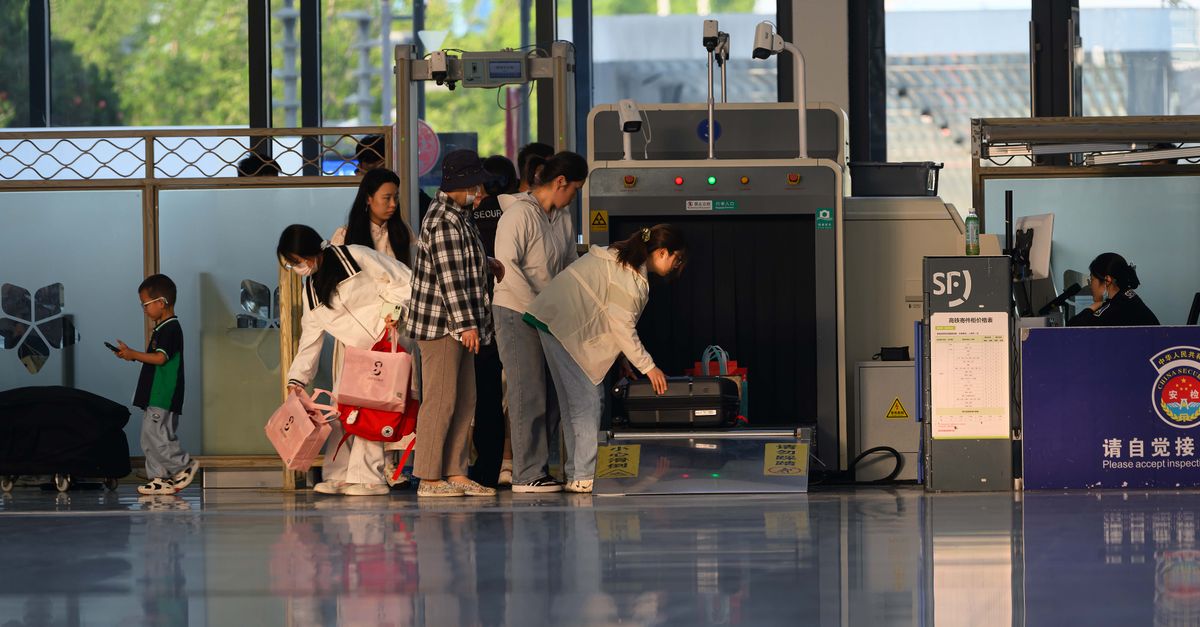
Heathrow screens passengers using body scanners, as directed by the UK's Department for Transport, rather than relying only on walk-through metal detectors, and this applies across all four terminals. The scan itself is quick and shows a generic outline rather than an actual image of your body, so an officer sees only where to check, not what you look like underneath your clothes. If you'd rather not use the scanner, you can ask for a private hand-search instead, and there are specific rights around how that search is carried out.
How Heathrow's body scanner process works
All departing passengers go through security before reaching the departure area, and Heathrow uses body scanners as standard, in line with Department for Transport direction that applies across most UK airports. You step into the scanner, and the machine checks for anomalies against a generic outline rather than producing a detailed image of your body. Any area flagged is shown to the officer as a zone to check, so a follow-up pat-down, if needed, is targeted rather than a search of your whole body.
Heathrow completed a £1 billion technology upgrade in January 2026, rolling out next-generation CT security scanners across all four terminals, the largest airport in the world to do so fully. Alongside faster, smoother screening generally, it means passengers can keep liquids and large electronics in their cabin bag rather than removing them for a separate check, which has also sped up the process at the main security lanes.
Can you opt out of the body scanner at Heathrow?
Yes. Under published UK government guidance on rights at the airport, you can ask for a private search instead of a body scan at any UK airport, including Heathrow. This is a thorough hand-search, and you may be asked to loosen or remove some items of clothing as part of it. You can also ask for a security officer of the same sex to carry out the search.
There's a related right if you're asked to go through a scanner because you've been randomly selected or have triggered a metal detector: you can ask that the officer analysing your scan image isn't able to identify you, and that you won't meet that officer face to face. This applies whether or not you're pregnant; pregnant passengers can still be asked to go through a scanner or a metal detector, but can request a private search instead if they prefer.
What if you have a medical device, implant, or prosthetic?
Tell a security officer before screening starts, not partway through. Heathrow specifically names several devices that may need an alternative method or an additional hand-check:
- Continuous glucose monitors (CGMs) and insulin pumps, which need a different screening approach rather than the standard scanner or an X-ray.
- Stoma bags, which may be detected by the scanner and can lead to a follow-up hand-search.
- Cochlear implants and feeding tubes, which also sit on Heathrow's list of devices to flag in advance.
- Implantable cardioverter defibrillators (ICDs): you can ask for a hand search instead of scanning, and should carry your ICD identification card when you travel.
- Hearing aids: you can ask for these to be hand-searched; bringing a letter from your doctor can help, though the final decision on whether a hand search is needed is up to the airport.
Heathrow's own guidance is that a little planning before you travel, bringing a copy of your prescription, a doctor's letter, or manufacturer guidance for your device, makes these conversations at security quicker and easier, even though the documents aren't always required.
Religious or cultural headwear
If you're wearing headgear for religious or cultural reasons, you're not required to remove it at security. You can ask for it to be checked using a hand-held scanner instead.
Why Heathrow uses scanners at all
Security scanners at Heathrow, and at most other UK airports, operate under a legal direction issued by the government under the Aviation Security Act. It's a consistent national requirement rather than a choice Heathrow has made independently, which is why the process, and your opt-out rights, are broadly the same at other major UK airports too.
What to expect at the scanner, step by step
- You'll be directed to a scanner lane after the standard bag and tray process.
- With Heathrow's upgraded CT scanners, you generally keep liquids and large electronics in your bag rather than removing them separately.
- Step into the body scanner, follow the brief instructions, and the scan itself takes only a few seconds.
- Step out while the result is checked against the generic outline.
- If a specific zone is flagged, an officer will explain what they need to check and carry out a targeted pat-down of just that area; if nothing is flagged, you're clear to move on.